Active pharmaceutical ingredients (APIs) are the substances in a drug that produce the intended therapeutic effect. APIs are distinct from the various other “ingredients” that go into producing a drug. APIs focus on the drug’s therapeutic effect, not on producing the drug‑delivery medium, such as water for injection (WFI). In both synthetic and biologic APIs, pH and conductivity are mandatory measurements. As a pharmaceutical application, hygienic and verification standards apply at varying degrees to both APIs.
Synthetic v. Biologic API
The term API applies to both synthetic and biologic drugs, but the API’s identity and the way manufacturers handle it on production lines differ significantly. Over-the-counter anti-inflammatories such as ibuprofen and aspirin use synthetic APIs. These compounds are highly reproducible in controlled environments and are largely insusceptible to bacterial growth. Over-the-counter anti-inflammatories such as ibuprofen and aspirin use synthetic APIs. The chemical makeup of the APIs on the synthetic side of pharmaceuticals are the most critical factor. pH measurements apply when aiming for certain chemical, pH-sensitive reactions to occur. Multi-step chemical reactions, and purification methods such as distillation and extraction are typical for synthetic APIs. Conductivity measurements are necessary for utility functions, such as CIP & SIP functions, as well as water for injection (WFI) production. Biologic APIs are much more complicated and require more stringent process and hygienic standards.
Biologic APIs are larger, more complex molecules. These are naturally occurring therapeutic compounds, unlike their chemically synthesized counterparts. Such compounds are particularly sensitive to pH levels. Engineers design specific reaction environments with controlled temperature and pH to prevent degradation or contamination from unintended bacterial growth. Manufacturers formulate and process biologic APIs using techniques such as fermentation, chromatography, and filtration.
Solutions Driven by M4 Knick
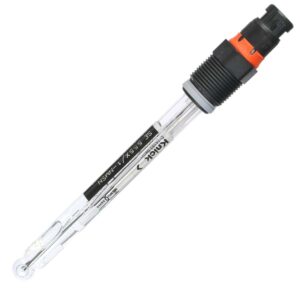
- Durable Sensors — Fully digital Memosens pH sensor’s like the SE 555 eliminates noise commonly found in traditional analog systems. The electrode is designed for hygienic applications and can withstand CIP & SIP cleaning methods. Memosens conductivity sensors like the SE680 and SE605H are designed with high purity applications in mind.
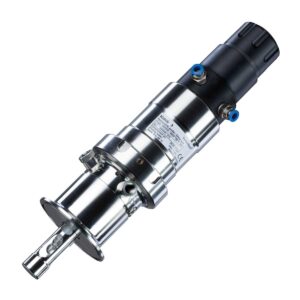
- Retractable Holders —Hygienic holders such as the Sensogate WA 131H manually retracts the sensor. It is equipped to allow steam delivery directly into the cleaning chamber, ensuring sterilization of the sensor. This maintains a closed system, meeting FDA compliance. For biologic APIs, a tri-clamp connection on the Sensogate holder vastly minimizes the potential for bacterial growth that can occur in threaded connections.
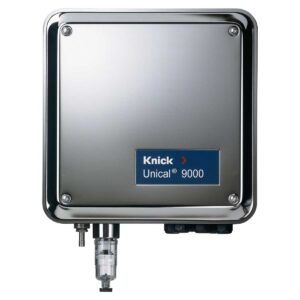
- Automated pH Maintenance System — The Knick cCare system is designed to extend sensor life by providing automatic retraction, cleaning, calibration, and insertion of inline process sensors. cCare systems address sensor performance issues in challenging processes that demand accuracy and consistency, while eliminating human error.
- Intuitive Transmitters — The Protos 4400 and Stratos MULTI provide the output signal and real-time diagnostics for the pH and conductivity electrodes. Simple plain text operation and easy setting configuration. Expandable to digital bus communication and operation with Memosens, ISM and analog electrodes. For conductivity measurements an integrated USP 645 function allows operators to designate pass/fail conditions to ensure they are compliant with USP guidelines for WFI.
API manufacturing typically requires additional validations on measurements. M4 Knick is able to assist with those validations for your process.
Repeatable and Reliable ROI
Validation: Peace of mind through third party, hygienic validation testing for hygienic retractable holders. M4 Knick transmitters also work with validated Memosens, ISM, or analog pH, dissolved oxygen, and conductivity sensors.
Intuitive Knowledge of Sensor & Process Condition: Memosens technology allows technicians to observe sensor conditions using onboard diagnostics of the cCare system. This provides an additional verification that the sensor is healthy and reading accurately.
Minimized Downtime: Reliable pH and conductivity sensors reduce the frequency of maintenance and calibration, leading to less downtime and higher productivity.
M4 Knick designs solutions that address our customers’ challenges head on. To learn more about how we can enhance your process, schedule a training or reach out to one of our experts. We’re happy to help.