MemoRail Modbus Transmitter Product Highlight

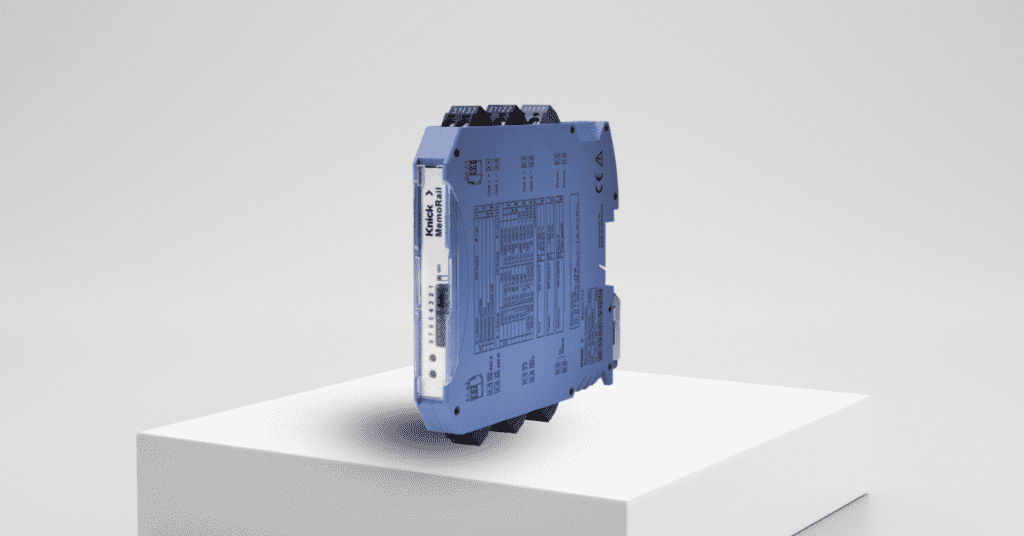
MemoRail Modbus is a low-cost, space-saving, alternative to traditional liquid analyzers.

Compact multi-parameter transmitter for process analysis

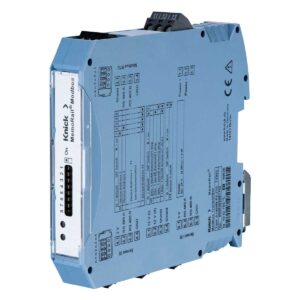
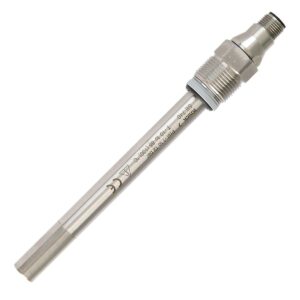
MemoRail Modbus is a compact, digital transmitter available with up to 2 sensor inputs. It is designed for use with the SE 740 optical oxygen sensor and Memosens sensors for the measurement of pH, ORP, conductivity, oxygen, and temperature. Up to 32 devices can be operated in parallel using Modbus RTU. Device address, link parameters, and data rate are selectable.

MemoRail Modbus is a low-cost, space-saving, alternative to traditional liquid analyzers.


QUICK SPECS

Temperature:  -14 … 149 °F (-10 … 65 °C)
Power Supply: 4-wire (24 VDC)
Inputs: Up to two channels, Memosens sensors as well as digital SE 740 optical oxygen sensor.
Outputs: Modbus RTU
Mounting:  DIN Rail (35 mm Top Hat)

FEATURES

  • Simple device setup using dip switches for device address, link parameters, and data rate
  • LEDs for the indication of device and sensor status/health
  • Modbus RTU Output
    • Process values and diagnostic data transmitter
    • Up to 32 can be operated in parallel (up to 64 total sensors)
    • Sensor calibration can be performed from the control system

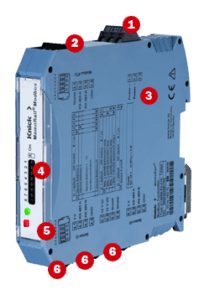
MemoRail Modbus Transmitter Anatomy

1 – POWER INPUT: 

4-wire (24 VDC)

MemoRail Modbus Anatomy

2 – OUTPUT:

Modbus RTU

3 – CONVENIENT DIAGRAMS: Setup and Wiring

Wiring diagram and DIP switch configuration printed on the device

4 – DIP SWITCHES: Simple device configuration

Place DIP switches in the proper position for device address and data rate

5 – STATUS INDICATION: LED Lights

Steady Green Power/OK
Steady Red Device error, repair required
Flashing Red Sensor failure or communication fault
Blinking Red Sensor parameter error

6 – SENSOR INPUTS: Connections for two sensors (the dual-channel version is shown)

Connects to SE 740 optical oxygen sensor and any Memosens pH/ORP, conductivity, or oxygen sensor


Related posts

Maintaining Visibility in Steam Water Analysis Systems

Optimizing visibility in SWAS is crucial to ensure that measurements are not drifting outside of desired parameters.

Glass v. ISFET: Where It Matters

Choosing between a glass and an ISFET pH sensor depends largely on the mechanical demands and hygienic requirements of the process.

How Long Should a pH Sensor Last?

Though no sensor lasts forever, operations should not have to replace sensors faster than they can afford.
MemoRail Modbus Transmitter Product Highlight