pH Sensor for Low Conductivity Liquids
The SE 558 Memosens pH sensor is ideal for use in high purity water. This low-maintenance sensor is designed for use in applications with a conductivity of >10 μS/cm. Constructed using Alpha pH glass, 3 ceramic junctions, and a KCl reservoir, the SE 558 is a great alternative to high-maintenance, liquid-filled pH sensors. An integrated NTC 30K temperature element accurately compensated for the temperature of the process media.
The reduced maintenance requirements, along with the integration of Memosens technology, provide for a significant reduction in the overall cost of ownership.
The SE 558 is suitable for use with any M4 Knick transmitter.
QUICK SPECSRange: 0 … 14 pH |
TYPICAL APPLICATIONS
|
SE 558 pH Sensor Anatomy
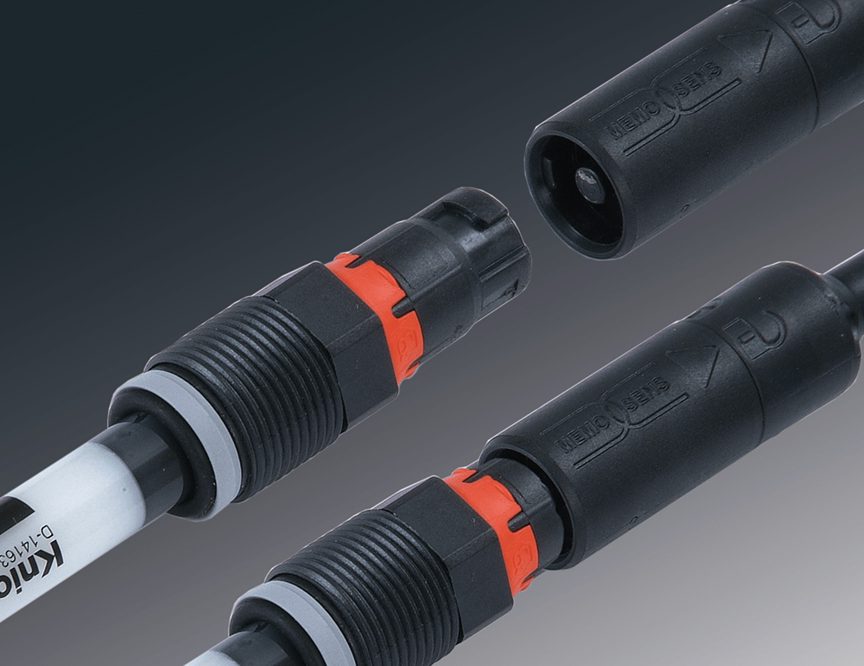
1 – SENSOR HEAD: Memosens Digital Sensing TechnologyMemosens sensors provide several benefits with regard to ease of use and reduction of operating costs:
|
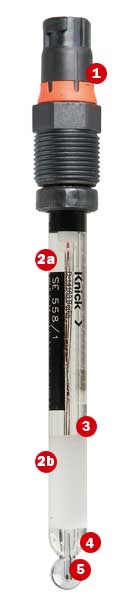 |
2 – ELECTROLYTE:a) Gel: Gel electrolyte does not require refilling, making this sensor a low-maintenance solution. b) KCl Rings: A KCl reservoir (solid KCl rings) assist in preventing the electrolyte from being leached out of the reference system, extending sensor life. |
|
3 – REFERENCE ELECTRODE: Ag/Ag Cl – Silamid®The Silamid reference electrode is constructed using a glass tube internally lined with silver and packed with silver chloride powder. A polyester fiber plug is added as an additional barrier to prevent poisoning and extend sensor life. |
|
4 – DIAPHRAGM/JUNCTION: 3X CeramicRobust and corrosion-resistant design. The density of a ceramic junction allows for the reference system to be pressurized. This slows the fouling/poisoning of the reference system, extending the time between calibrations and reducing sensor replacement frequency. Using 3 junctions eliminates the influence of flow and ensures a solid connection between the reference electrode and process fluid. |
|
5 – SENSOR MATERIAL: Alpha pH glassAlpha glass is medium-impedance, fluoride-resistant, hydrogen sensitive glass. It is designed for use in applications requiring fast response time in both low temperature and extremely low ionic environments (>10 μS/cm). |