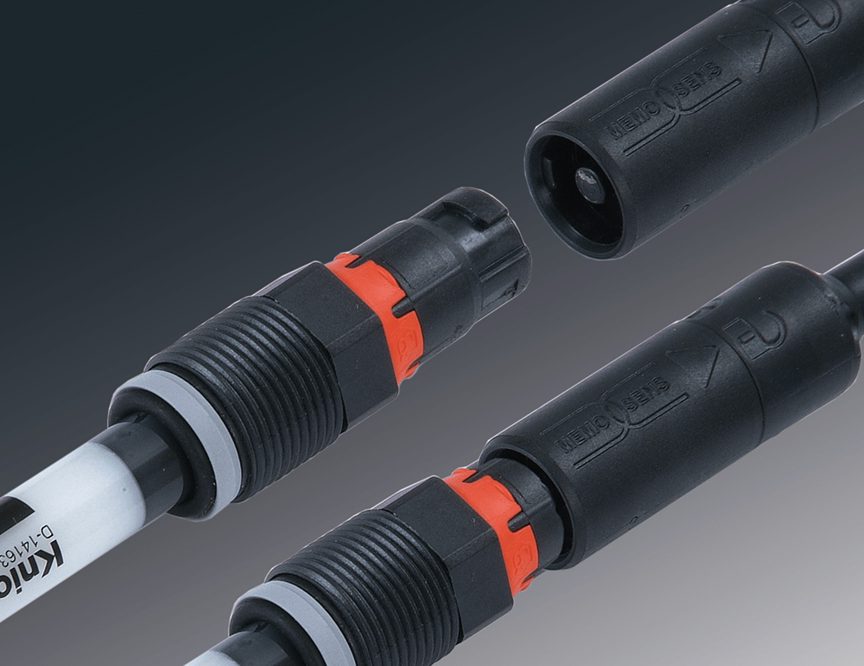
If you were to count all of the in-service pH sensors on process lines worldwide, an overwhelming majority of them would likely be glass. Glass pH sensors have been the industry standard for over a century. But in some processes, that glass bulb becomes a liability. So what else is there? Non-glass pH sensors also play a prevalent role in a wide array of processes, often where glass is not permissible.
The differences among these sensors isn’t necessarily about what performs better. The optimal choice depends on mechanical conditions, regulatory requirements, contamination risk, and overall process criticality. In this blog, we’ll examine some areas where these two sensors differ, and why it is sometimes necessary to use one or the other.
Where Glass and ISFET Differ
How Glass Sensors Work
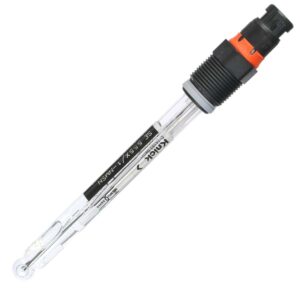
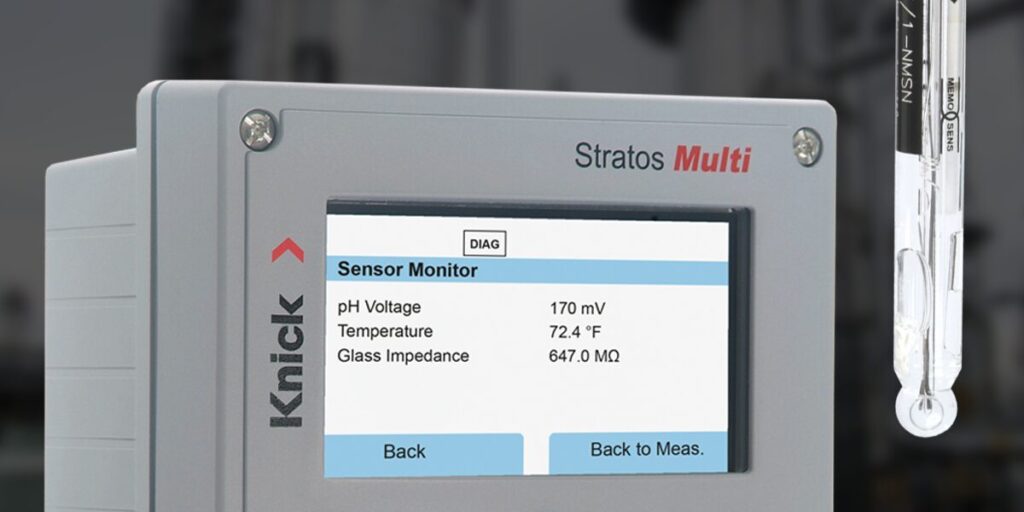
Glass pH sensors use a thin glass membrane bulb that develops a voltage proportional to hydrogen ion activity. They require a reference electrode, typically silver/silver chloride in a potassium chloride solution. The hydrated gel layer on the glass surface enables measurement. Glass sensors are available in wide arrays of specialized designs for elevated temperature, pressure, and aggressive or unique process chemistry. Glass sensors, like the SE555 remain the standard for high-accuracy and stable industrial pH measurements in power generation, chemical processing, and water & wastewater applications.
How ISFET Sensors Work
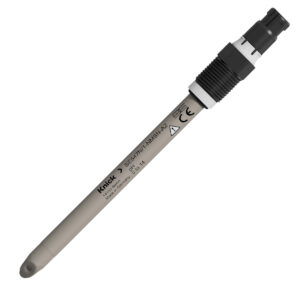
ISFET sensors use a solid-state semiconductor chip instead of a glass membrane. They measure hydrogen ion activity through changes in the electrical field at the gate surface. These sensors are completely glass-free, typically housed in an industrial grade plastic, and are designed for hygienic or sterile applications. In pharmaceutical or food production processes that require repeated steam sterilization or aggressive cleaning, thermal and pressure cycling can shorten glass electrode life. Applications featuring highly abrasive media or strict CIP/SIP cycles may crack or prematurely ware a glass probe in these environments. These types of applications are where ISFET sensors excel. Some processes may even restrict glass sensors for hygienic or compliance reasons. Rather than risk contamination through a broken glass sensor, an ISFET sensor, such as the SE547, would serve as the better option.
How to Know Which Sensor Best Fits Your Process
A sensor’s performance is as dependent on the process as it is on its construction. Choosing between a glass and an ISFET pH sensor depends largely on the mechanical demands and hygienic requirements of the process. When the sensor can remain continuously wetted and protected from impact or abrasion, glass technology typically delivers the best balance of precision and value.
In food and beverage production, pharmaceutical manufacturing, and other biotechnology, the absence of a fragile glass bulb eliminates breakage concerns and reduces contamination risk. When processes involve vibration, solids, viscous media, or strict hygienic standards, ISFET technology often provides greater operational confidence and longer service life.
M4 Knick, our experts and our resources are always available to our partners on the process line. No matter your process, or your issues, we’re determined to find the proper solution. Contact our experts or schedule a training today to learn more about our sensor technology and other process solutions.